

EMDR Intensives: What to Expect
Examples of Intensive Paths
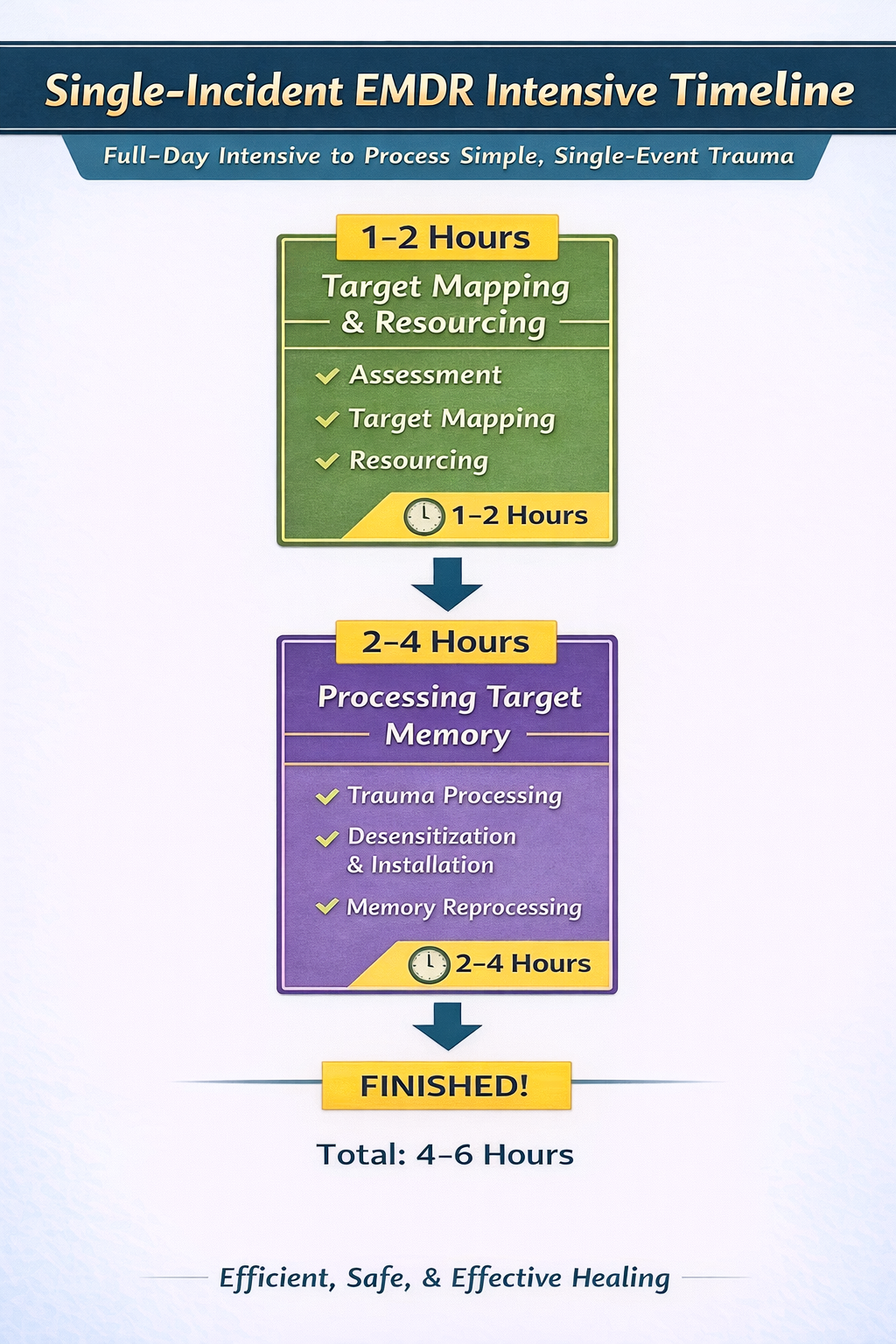
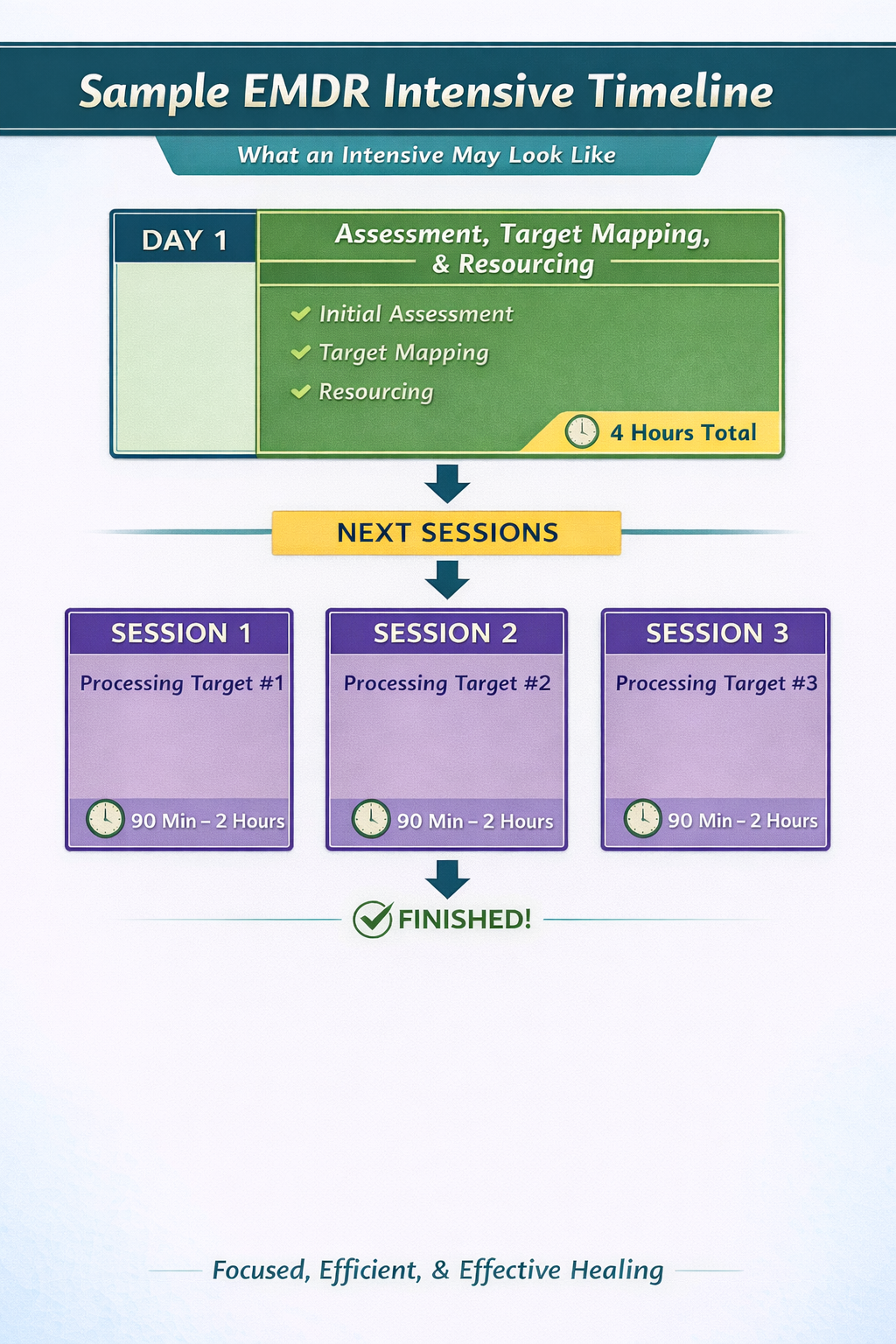
EMDR Intensives are designed to help clients move through trauma work in a focused, structured, and time-efficient manner. Because intensives involve extended processing time, a consultation is typically required first to ensure that EMDR is clinically appropriate and that clients are emotionally stable enough for this format. Not everyone is a candidate for intensive trauma work, and readiness matters.
All clients begin with a comprehensive initial assessment (approximately 60 minutes). This allows us to clarify history, current symptoms, treatment goals, and determine whether an intensive is clinically appropriate.
The Phases of EMDR
EMDR follows an 8-phase protocol:
History Taking
Preparation
Assessment
Desensitization
Installation
Body Scan
Closure
Reevaluation
During an intensive, we move thoughtfully through these phases rather than rushing them.
Target Mapping & Resourcing (Typically 2–4 Hours)
After the initial assessment, we:
Explore the incident(s) and their impact
Identify patterns and core themes
Develop a structured target plan
Identify and install internal and external resources
Strengthen stabilization skills
We typically recommend 2–4 hours for thorough target mapping and resourcing before engaging in deep processing. This foundation significantly improves efficiency and safety during later phases.
Processing Sessions (90–120 Minutes Recommended)
For active EMDR processing, we generally recommend 90–120 minute sessions per target. Shorter sessions often do not allow enough time to fully activate, process, and close a memory effectively.
As a general rule, clients should plan for a minimum of 90 minutes per target memory. The number of targets selected will largely determine how long someone can expect to remain in therapy.
Single-Incident Trauma
If the trauma is truly a single-incident event (for example, a serious car accident or being the victim of a violent crime), one full-day intensive — approximately 4–6 hours of processing — may be sufficient to resolve the primary disturbance. In some cases, single-incident trauma may be resolved in a single day. This can also be divided across multiple days if clinically appropriate.
Complex Trauma
In contrast, complex trauma — involving multiple traumatic experiences over a long period of time, often beginning in early childhood — typically requires significantly more time. Multiple targets are often involved, and treatment duration depends on:
Number of memories selected
Level of emotional intensity
Current life stressors
Nervous system regulation capacity
How We Prioritize Targets
To increase efficiency, we help clients identify the most impactful memories using a structured formula we developed:
Intensity × Frequency
How intense are the emotional reactions?
How often do they show up in daily life?
By prioritizing memories that score high on both intensity and frequency, we can often reduce overall treatment time while still creating meaningful symptom relief.
Planning Your Time Commitment
While every client’s journey is unique, we encourage clients to think in terms of:
60 minutes – Initial assessment
2–4 hours – Target mapping and resourcing
90–120 minutes per processing target
A single incident may require only one extended day. Complex trauma may require multiple extended sessions over time.
Our goal is not speed for its own sake — it is efficient, safe, and durable trauma resolution.
Another consideration for clients who must exclusively rely on health insurance is to schedule at least two EMDR sessions per week. This is generally allowed by insurance companies. While the sessions are not as long, being seen at more frequent intervals will still expedite the process and is an effective and practical alternative.